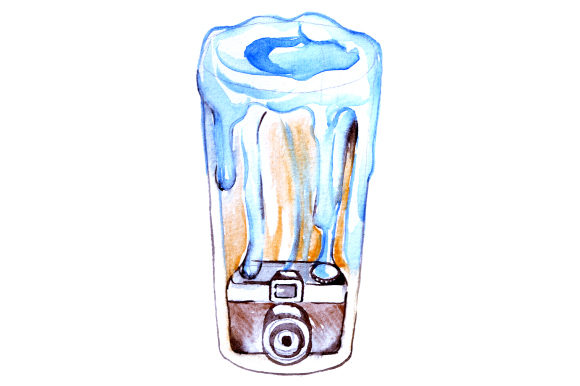
Tumbler and Camera
A Designer’s First Glance: Clean, Modern, and Quietly Confident
Opening Tumbler and Camera for the first time, I didn’t see a busy motif or a forced trend—I saw two quiet icons with strong visual rhythm. The tumbler leans slightly right; the camera sits just above it, angled to echo that tilt. There’s breathing room between them, no overcrowding, no unnecessary flourishes. It feels like a design made for people who appreciate subtlety—think coffee shop merch, indie photographer branding, or a minimalist baby onesie for the creative parent. Not loud, not literal, but unmistakably *about* craft, pause, and observation.
Real-World Use: That Tote Bag Moment
Last week, I prepped a small-batch run of organic cotton tote bags for a local bookstore’s “Meet the Maker” event. Their request? Something that nods to creativity without screaming it. I pulled up Tumbler and Camera, sized it to 3.2" wide, and stitched it on the lower left front panel—just above the seam. On unbleached canvas, with matte charcoal thread and light tear-away stabilizer, it landed perfectly: legible at arm’s length, detailed enough to hold interest up close, and soft enough in stitch density that the fabric didn’t pucker. Customers paused. Some smiled. One asked, “Is that your logo?” That’s the sign of a working design—not just a file, but a quiet connector.
Where It Shines (and Where It Asks for Care)
Tumbler and Camera excels on stable, medium-weight fabrics: canvas totes, cotton sweatshirts, linen aprons, tea towels, and structured pillow covers. Its balanced proportions translate well across hoop sizes—no awkward cropping needed at 4x4 or 5x7. As a machine embroidery design, it relies mostly on smooth satin stitch for outlines and clean fill stitch for solid areas. No dense underlay, no micro-detailing that collapses on stretchy knits.
That said—exercise gentle caution on: thin or loosely woven fabrics (like lightweight rayon or gauzy muslin), where stitch definition can blur; dark fabrics with light thread (check contrast early—those camera lens curves need clarity); and curved surfaces like caps, where the tumbler’s straight base may require slight repositioning or hooping adjustment. It’s not an applique design, so avoid layering it over bulky seams or textured embroidery unless you’ve tested stabilizer stack-up first.
Small Details, Big Impact
The camera’s viewfinder is subtle—not a tiny circle, but a soft-edged rectangle with just enough interior line to read as functional. The tumbler’s lid has a fine satin-stitched rim, not a thick border. These aren’t gimmicks—they’re intentional cues that tell your customer this was designed by someone who understands how thread behaves, not just how vectors align. That nuance elevates a handmade product from “cute” to “considered.” For Etsy sellers or boutique owners, that difference affects perceived value—and willingness to pay.
Commercial Realities: Licensing, Mockups, and Customer Trust
If you’re selling finished items—embroidered sweatshirts, baby blankets, or custom patches—you’ll want to confirm licensing terms directly with Designs Amp. This isn’t a public-domain motif. As a Crafts category digital embroidery file, its commercial use hinges on their policy. When listing on Etsy or your own site, pair Tumbler and Camera with realistic printable mockups: show it on a cream linen tea towel, a heather grey crewneck, and a navy denim cap. Avoid over-polished renders—your buyers are makers too, and they spot artificiality fast.
I always test Tumbler and Camera in black-and-white mockups first. Why? Because if it reads clearly without color, it’ll hold up on dark fabric, in low-light settings (like a dim nursery), or when viewed quickly online. It does. The shapes remain distinct, the spacing stays generous, and the negative space works as hard as the stitches.
Practical Designer Notes You’ll Actually Use
- Test before committing: Stitch Tumbler and Camera on scrap fabric matching your final project’s weight and stretch—even if it’s just a 2"x2" swatch.
- Stabilizer matters: Light cutaway for knits, tear-away for stable wovens, and a touch of topping for napped fabrics like fleece or terrycloth.
- Thread color strategy: Try it in tonal grays first—charcoal on oatmeal, slate on indigo. Then shift to contrast only where it serves the product (e.g., white on black for holiday gift totes).
- Hoop size check: Confirm your machine’s maximum stitch width fits the design comfortably—especially if scaling beyond 4".
- Fabric texture test: Run a quick stitch on a folded edge of your garment or towel. Does the tumbler’s base sit flat? Does the camera angle stay crisp? If not, adjust tension or stabilizer—not the file.
- Licensing clarity: Before uploading to your digital product store or bundling with other designs, verify whether Designs Amp permits resale of Tumbler and Camera as part of a larger embroidery collection.
Why It Fits Your Craft Business—Without Trying Too Hard
You don’t need to explain Tumbler and Camera. It doesn’t demand attention—it earns it. That makes it ideal for small shop products where brand voice is calm, thoughtful, and human-scaled: a baby embroidery set for a new photographer parent, a holiday gift bundle with mugs and embroidered coasters, or a limited-run apron for a local ceramics studio. It supports your story instead of shouting over it.
For embroidery designers building a portfolio or digital product library, Tumbler and Camera is a versatile anchor piece—neither too niche nor too generic. It bridges apparel decorators, Etsy sellers, and hobbyists who embroider for joy *and* income. And because it ships in SVG, Transparent PNG, EPS, and DXF, you’re covered whether you’re digitizing for machines, prepping for print-on-demand, or creating layered craft kits.
In short: Tumbler and Camera is a design that knows its role. It doesn’t try to be everything. It just does one thing—quietly, cleanly, confidently—very, very well.