Cat in a Coffee Cup Crafts for Cats Lovers
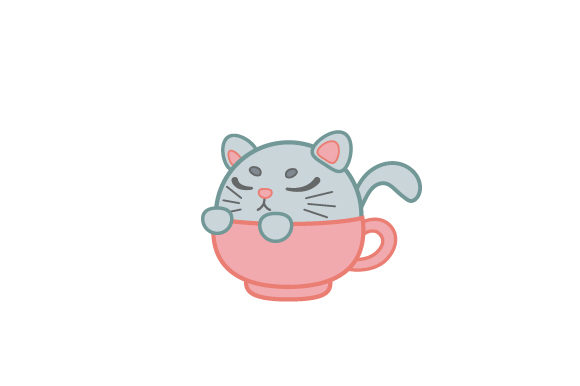
As someone who’s shipped over 3,000 handmade mugs, stickers, and planner kits—and built two Etsy shops from scratch—I opened Cat in a Coffee Cup with high expectations. Not just for cuteness, but for craft-ready reliability. Right away, the illustration landed with cozy charm: a relaxed tabby curled inside a steaming ceramic mug, soft curves, gentle negative space, and subtle steam swirls that suggest warmth—not chaos. It reads as playful yet refined—neither cartoonish nor overly detailed—so it fits customers who love whimsy *and* wearability. Think Etsy shoppers browsing “coffee lover gifts,” craft fair attendees drawn to handmade charm, or small business owners building a cohesive seasonal collection around “cozy cats” or “morning ritual” themes.
Real Crafting Workflows Where Cat in a Coffee Cup Shines
This graphic design asset isn’t just pretty—it’s versatile across real production channels. For my Cricut project last week, I used the SVG file to cut heat-transfer vinyl for a batch of cotton tote bags. The paths were clean, no stray nodes, and the cat’s outline held crisp detail even at 4.5 inches wide. On Silhouette Studio, the DXF imported smoothly for layered cardstock die-cutting—perfect for gift tags and party favors. I also dropped the transparent PNG into Canva to create printable wall art bundles (8×10 and 5×7), and the resolution held beautifully at 300 DPI. Because the background is truly transparent—not white or off-white—it layered cleanly over watercolor textures and kraft paper mockups without extra editing.
The EPS version gave me flexibility for sublimation design: I resized it for 11oz mugs and 20oz tumblers without pixelation, and the contrast between the cat’s fur and mug rim stayed legible on both light and dark blanks. For sticker design, I used the SVG to generate kiss-cut layouts in Sticker Mule’s template builder—no trimming issues. And when designing greeting cards, the balanced composition meant I could pair it with minimalist sans serif fonts (like Montserrat) for modern appeal—or with delicate script fonts (like Great Vibes) for feminine, boutique-style packaging.
Where This Design Fits Best in Your Handmade Business
Cat in a Coffee Cup excels where clarity, charm, and commercial readiness intersect. It works beautifully in large cut files (tote bags, tumbler wraps, fabric appliqués), clean printable layouts (planner stickers, gift tags, printable wall art), and seasonal craft bundles—especially for fall coffee-themed collections or Valentine’s Day “love your pet” sets. As part of a digital product launch, I bundled it with three coordinating coffee cup patterns and sold it as a “Cozy Cats Printable Kit” on Etsy. It also strengthened small business branding: I added a simplified version to my thank-you cards and packaging tape, reinforcing our shop’s warm, approachable voice.
It’s especially effective on products where emotional resonance matters: custom mugs for cat rescues, teacher appreciation gifts (“Because you’re brewed with love”), or local market tote bags that spark conversation. And because the illustration avoids excessive fine lines or micro-details, it scales well across print-on-demand platforms—from Redbubble mugs to Printful shirts—without requiring heavy optimization.
Where to Use Cat in a Coffee Cup With Intention
This isn’t a one-size-fits-all clipart solution. Avoid using it for very small sticker sizes (under 1 inch tall)—the steam detail and ear contours blur. Skip thin-line vinyl projects like intricate iron-on transfers for baby onesies; simplify the outline first. Don’t layer it densely in multi-color vinyl cuts—the mug handle and cat’s tail sit close enough that alignment shifts can cause gaps. And if your audience prefers bold, high-contrast graphics (think festival merch or streetwear), this illustration may feel too soft unless paired with strong typography or a vibrant background color.
Practical Crafter Notes You’ll Actually Use
Before adding Cat in a Coffee Cup to customer orders or shop listings, do these five things:
- Test the SVG in your cutting software—zoom in to check for double lines, overlapping paths, or ungrouped layers that could cause mis-cuts.
- Preview the transparent PNG against both white and black backgrounds—some monitors render transparency differently, and what looks clean on screen may need slight shadow or stroke adjustment for dark products.
- Confirm resolution for sublimation: open the PNG in Photoshop or GIMP and verify it’s at least 300 DPI at your intended print size—don’t rely on browser zoom.
- Resize strategically: scale proportionally in Design Space or Silhouette Studio—never stretch. At under 2 inches wide, consider simplifying the steam or removing the whiskers for cleaner cuts.
- Pair thoughtfully: it harmonizes best with friendly sans serifs (Lato, Nunito), elegant serifs (Cormorant Garamond), or light handwritten fonts (Dancing Script). Avoid heavy display fonts that compete with its gentle energy.
And always—always—verify the commercial license. I’ve seen too many handmade sellers pause mid-order because a “personal use only” clipart slipped into their bundle. This Cat in a Coffee Cup asset includes commercial rights, so you can confidently use it for Etsy products, craft fair inventory, client work, and small business branding—as long as you’re not reselling the raw files as standalone design assets.
In my studio, Cat in a Coffee Cup has already become a quiet workhorse: supporting mug designs, printable planner kits, seasonal gift tags, and even a limited-run tumbler wrap collection. It doesn’t shout—but it connects. And in handmade business, that kind of quiet resonance? That’s what builds repeat buyers, heartfelt reviews, and collections people want to live with every day.